Contact Us

Applications
LiDAR for Construction Machinery: Worker Detection with LiSSA Industrial
Discover how three LiDAR sensors support worker detection around an excavator, providing the spatial data its control system needs to stop the swing when someone enters the monitored danger zone.
LiDAR for Construction Machinery: Worker Detection with LiSSA Industrial
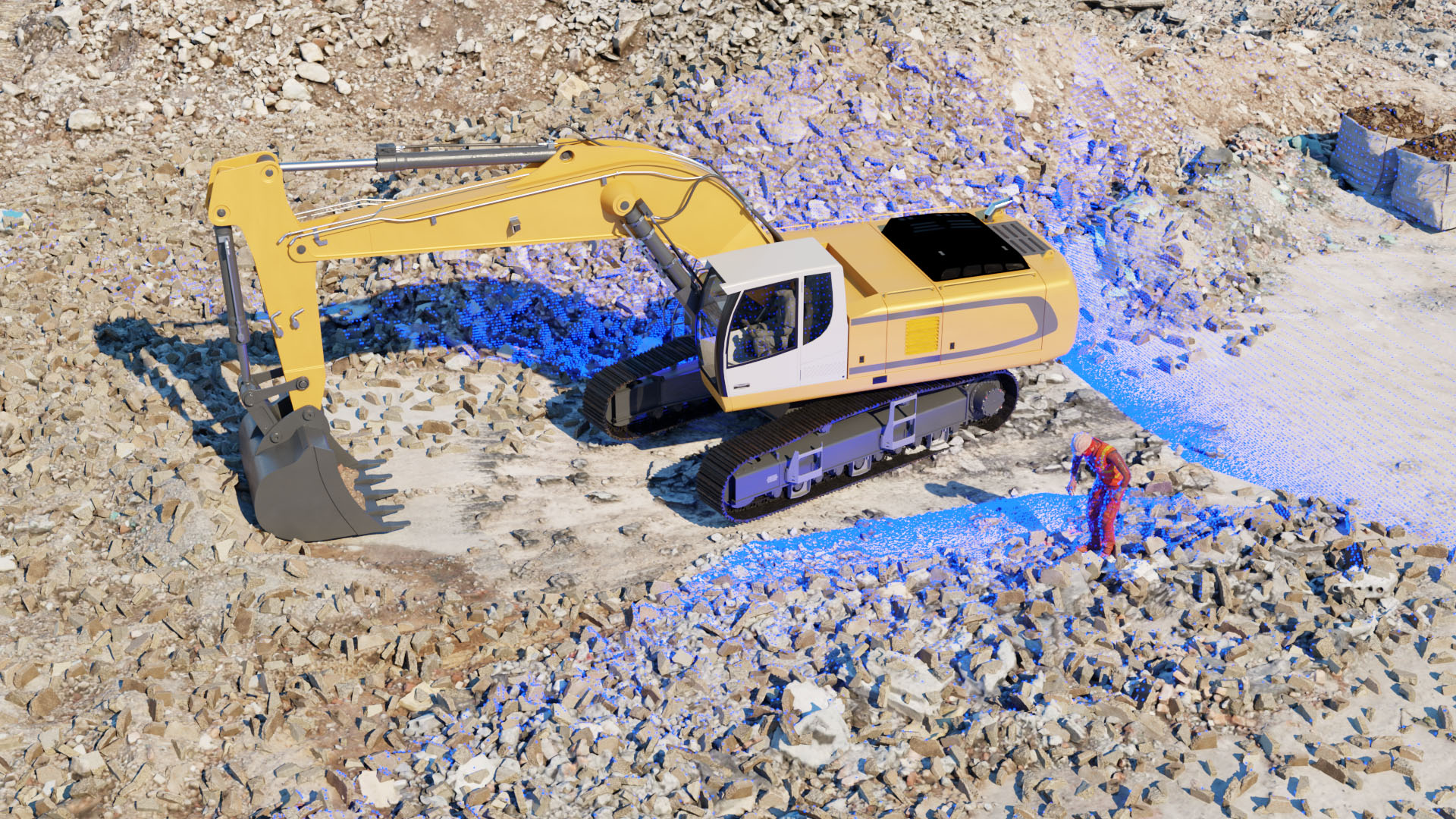
A worker steps into an excavator’s working area while the machine is turning. From the operator’s seat, the person may be difficult to see. As the boom and bucket swing across the site, this can quickly become a dangerous situation.
LiDAR can support systems designed to detect people near the machine and trigger a response. In the application concept shown here, three LiDAR sensors monitor the excavator’s surroundings. The aim is straightforward: detect a person entering the monitored danger zone and stop the excavator’s swing to reduce the risk of a collision.
The three sensors are positioned to observe the working area from different directions. This arrangement helps extend coverage around the machine, while the exact areas monitored depend on sensor placement, field of view, and obstructions such as the excavator’s own structure.
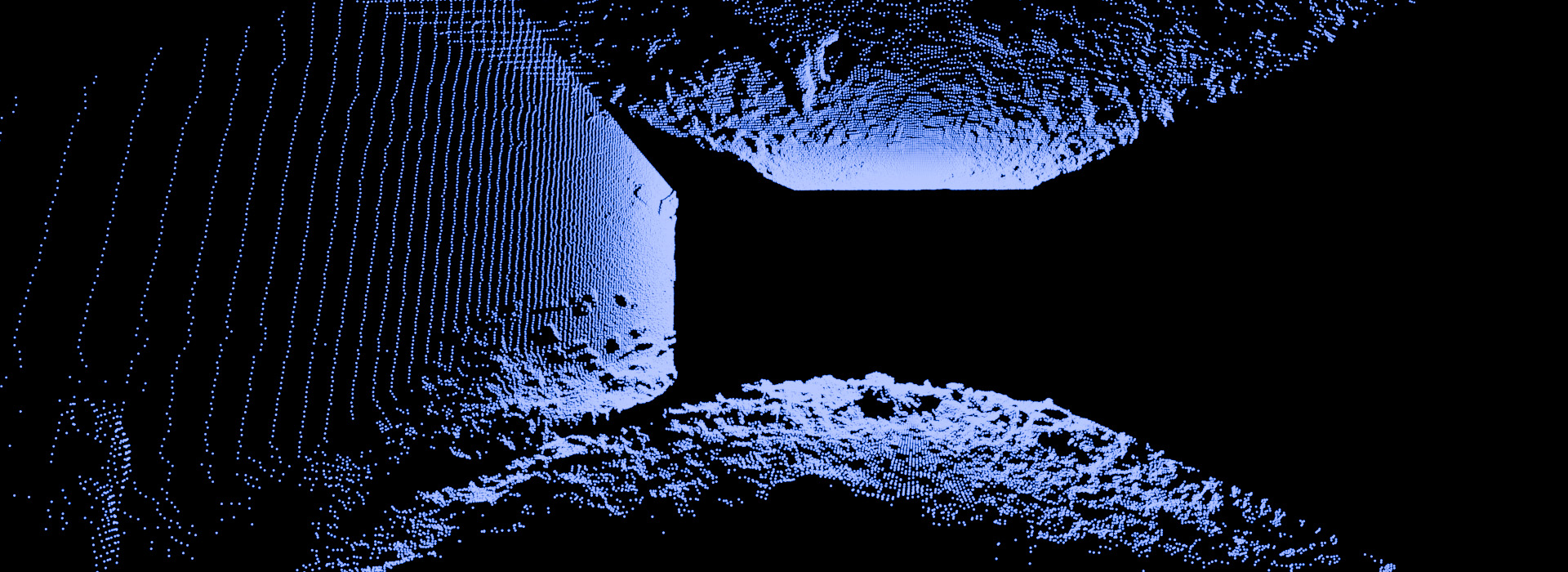
Each sensor uses laser light to measure distances to surrounding surfaces. These measurements form a three-dimensional point cloud representing the terrain, nearby objects, and people within view. Perception software processes this data to identify a person and determine their position relative to the excavator’s monitored working area.
The accompanying visualization illustrates this process. Blue measurement points show the surrounding scene, while the worker is highlighted to illustrate person detection. The separate point-cloud image shows a simulated representation of the environment, making the spatial information behind the application visible.
When the software detects a person inside the defined danger zone, it sends a stop request to the excavator’s control system. The control system then stops the swing movement—the rotation of the upper structure that carries the boom and bucket around the machine. The detection zone needs to account for the time and distance required to bring that movement to a stop.
LiSSA Industrial from Hybrid Lidar Systems provides solid-state 3D measurements for industrial perception applications. Its architecture has no moving parts, and multiple sensors can be arranged to observe different parts of a machine’s surroundings. Integrated with suitable perception software and machine control, this data can support worker detection and collision-avoidance functions.
For construction machinery developers, the value lies in connecting spatial awareness with a practical response: detecting someone in the working area and using that information to interrupt hazardous movement.
Explore LiSSA Industrial and discuss your construction machinery application with Hybrid Lidar Systems.